Please Note: DalesActive does not check or endorse the accuracy of the information provided on 3rd party sites and they should be used as information links only where your own judgement should be exercised!
Seven Day Weather Forecast for the Yorkshire Dales.
Without wishing to sound too alarmist, we thought it might be prudent to highlight the possible problems which may arise should you ever come into contact with a Tick.
It appears that Ticks are on the rise in the UK due mainly it seems, to the warmer, milder Winters that we have been having and also the growing numbers of wild deer on which they like to live.
How dangerous are they? The LDA (Lyme Disease Action) has published a great deal of information regarding Ticks and the associated Lyme disease on their website and the following extracts (with their kind permission) are from their excellent leaflets which can be found at -http://www.lymediseaseaction.org.uk/
Ticks in the UK - Do you know what to do!
Tick removal
As soon as possible
DO use a tick removal tool
DO NOT apply any creams, oils or heat to the tick
See your doctor if you have any symptoms
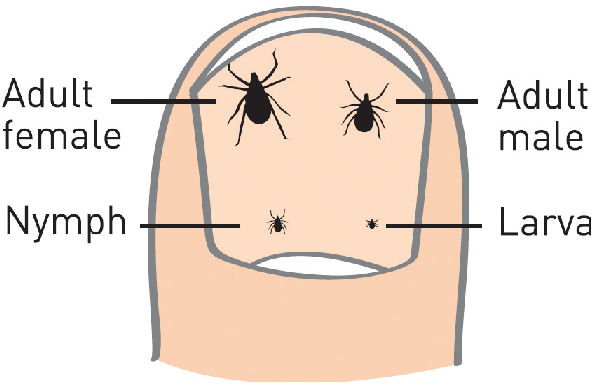
Ticks are larger after feeding, particularly adult females.
Facts
Lyme disease is present across the UK.
Lyme disease is transmitted by the bite of an
infected tick
Recent statistics show that case numbers are
rising - the actual total is unknown
Lyme disease is treated with antibiotics, which may
be long term
Testing does not identify all cases
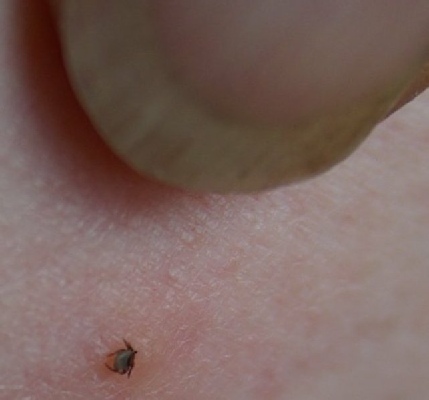
Tick bites are painless, and can go unnoticed
Ticks can also carry other diseases
Quotes
“My life has essentially been shattered by Lyme”
“I struggle to look after my children”
“After a year of debilitating illness I am now much improved after long term treatment”
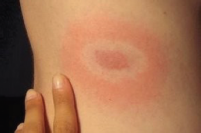
Symptoms may appear between 2 and 30 days after the bite and include